Your ChatGPT ads bid cap is going away
If you run ads on ChatGPT, the way you control cost is changing. OpenAI is retiring Max Bid and Max CPC, the two settings that put a hard ceiling on what you pay. In their place come average cost targets: Target CPA for conversion campaigns and Target CPC for click campaigns.
That sounds like a small settings change. It isn't. A cap and a target behave very differently, and the wrong number can cost you either way. Here's what is changing, when, and how I would set your first target.
What is changing and when
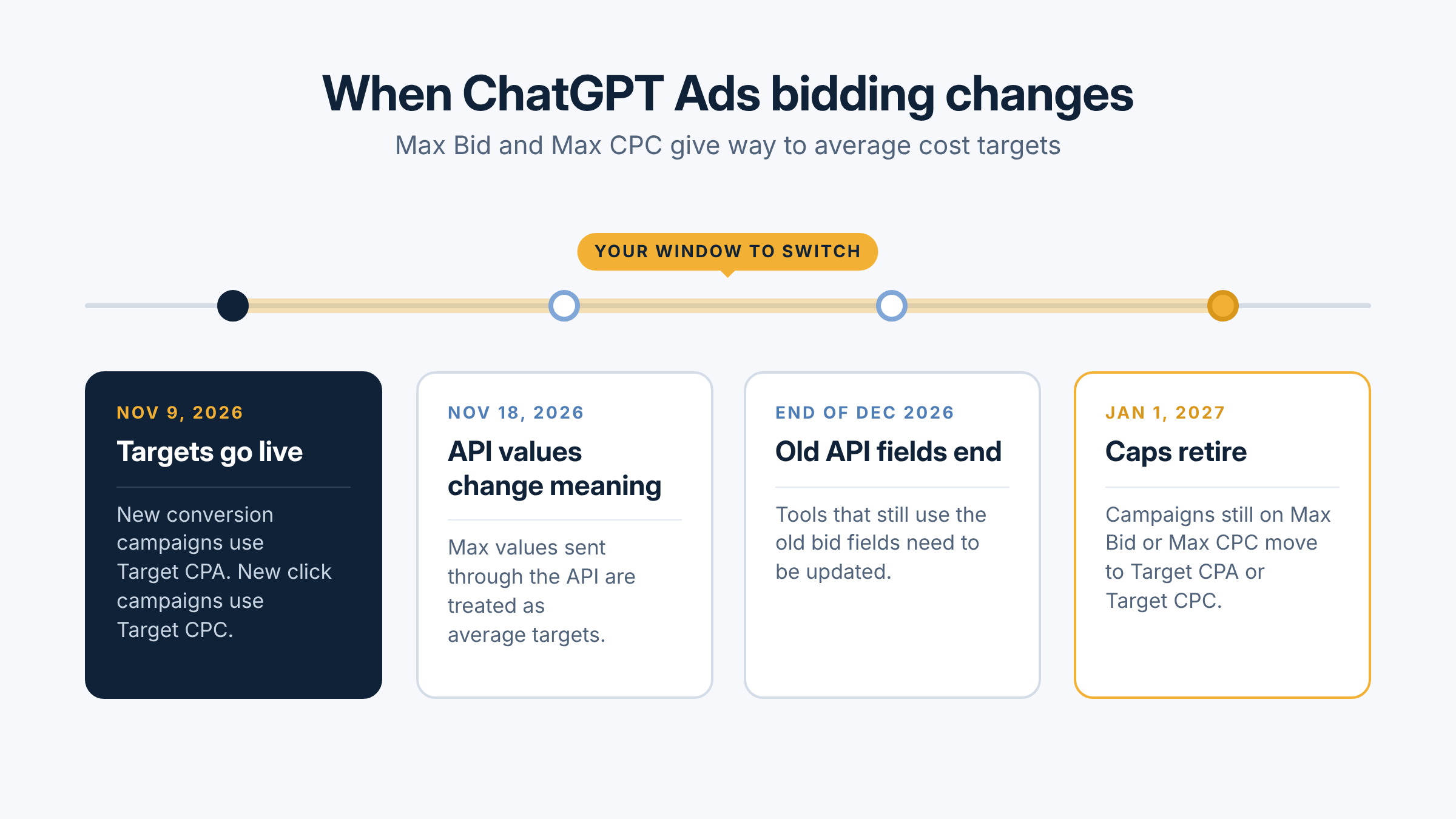
OpenAI told advertisers the changes start Monday, November 9, 2026. Here is the timeline:
- November 9, 2026: New conversion campaigns use Target CPA in place of Max Bid. New click campaigns use Target CPC in place of Max CPC. Existing campaigns keep running, and you can switch them over.
- November 18, 2026: If a tool or partner sends Max Bid or Max CPC values through the API, those values are treated as average targets, not maximums.
- End of December 2026: The legacy API fields stay active until this point.
- January 1, 2027: Max Bid and Max CPC retire. Existing campaigns still on them move to Target CPA or Target CPC.
OpenAI also renamed Maximize results. It is now called intelligent bidding.
If you work with an agency or use a third party tool to manage your ChatGPT ads, the November 18 date matters most. A number your tool still calls a "max" may already be working as an average.
Why an average target behaves differently from a cap
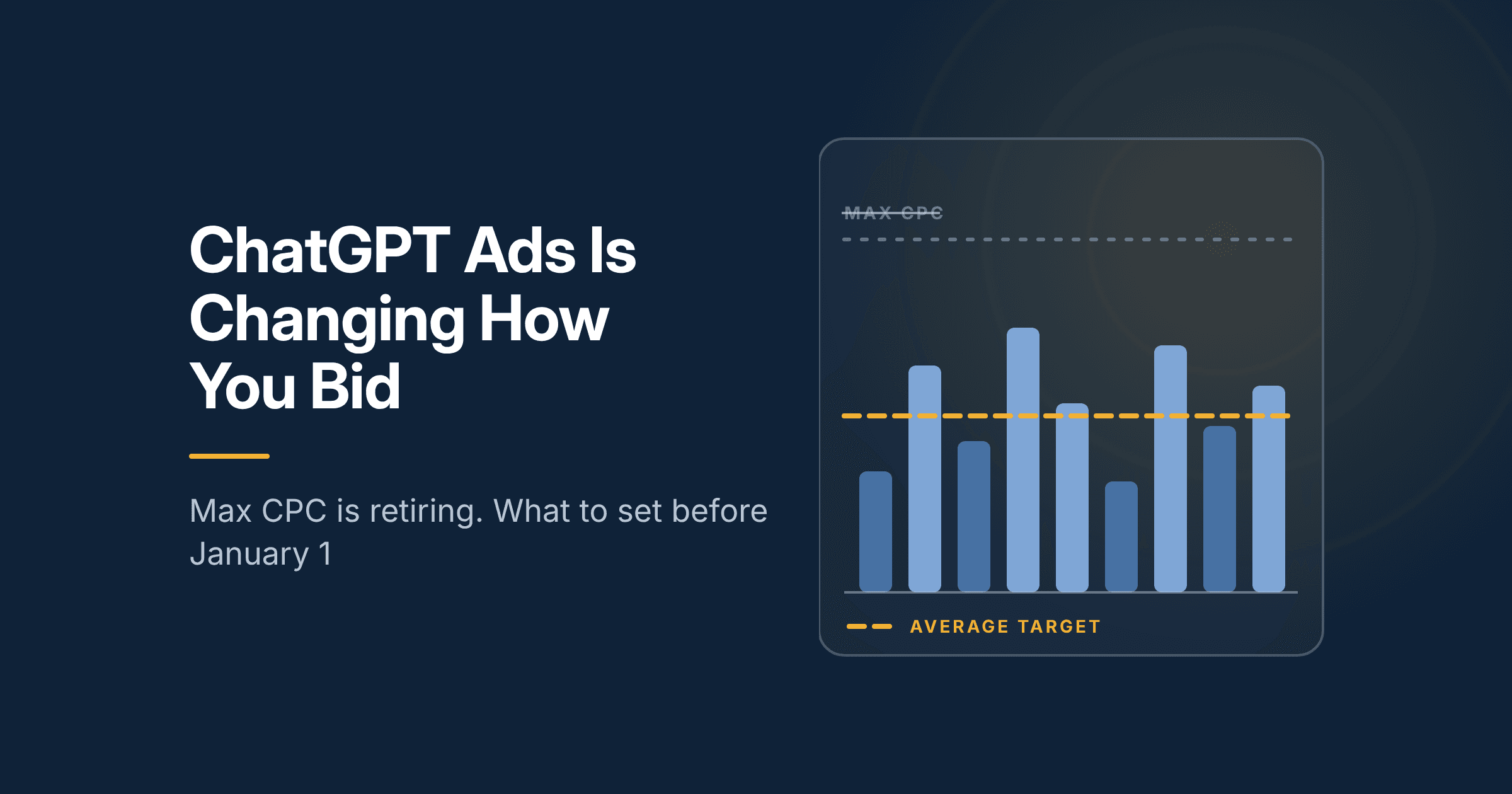
A cap says: never pay more than this for a click. A target says: try to average this across all your clicks or conversions.
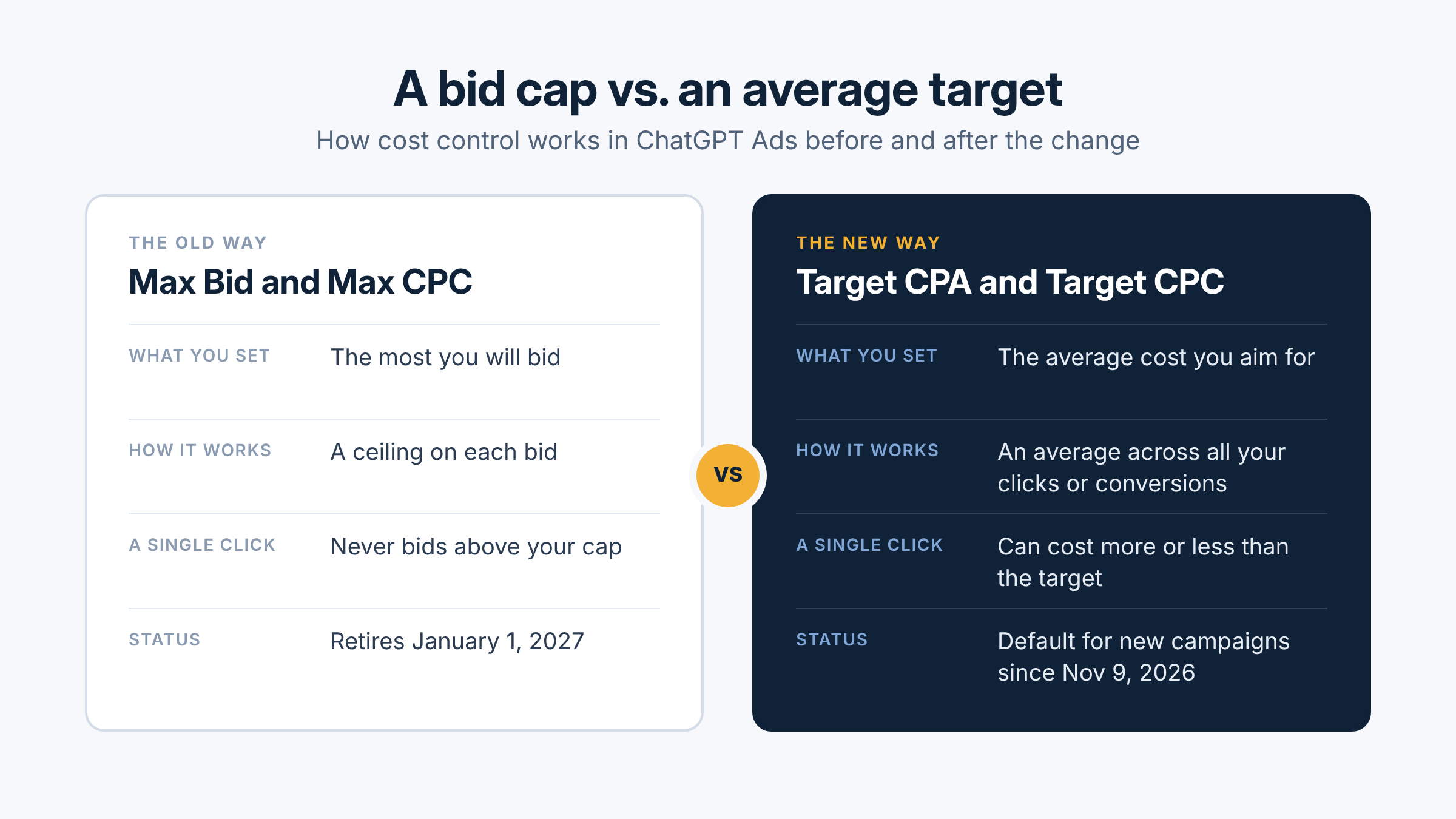
With a target, the system can bid above your number in one auction and below it in another. So a single click can cost more than your target, even when your average is right on it. OpenAI also notes that the winning bid sets the price you pay, under every bidding strategy.
There is a second side. If your target is lower than what you have actually been paying, the system may not win enough auctions. Delivery slows and budget goes unspent. That is not savings. It is reach you meant to buy and didn't get.
How to set your first target
I would not wait for January 1 to make this choice for you. If you switch a campaign yourself, you pick the target. Here is how I would approach it:
- Pull your recent actual costs. Look at what you have really paid per click or per conversion over the last few weeks. OpenAI recommends basing targets on recent actual CPA or CPC, not on your old cap.
- Check your conversion tracking first. For conversion campaigns, confirm your Pixel or Conversions API is sending the event you selected. OpenAI points advertisers to Event Quality Score warnings to find gaps. A target built on weak tracking is a guess.
- Start at your real average. Don't carry over an old cap that sat well above what you paid, and don't start well below your actual cost either.
- Switch one campaign before the rest. Move your most stable campaign first, watch it, then move the others.
- Decide what a good conversion is worth. A target only makes sense next to what a customer is worth to you. I wrote more on that in measuring marketing by revenue.
What to watch in the first few weeks
The system needs time to learn after a switch. During that stretch, I watch four things:
- Total spend against budget. If spend drops well below budget, your target is likely too tight.
- Average cost per click or conversion. Judge the average, not single clicks.
- Volume of clicks and conversions. A great average on very few conversions is not a win.
- Lead or sale quality. Check what those conversions turn into, not only how many there are.
If you also run Google Ads, this will feel familiar. Google uses target based bidding too, and the same habits apply. Ads inside AI answers are growing on both platforms, which I covered in Your Google Ads Now Show Up in AI Mode.
Questions to ask your team or agency
Before January 1, I'd get clear answers to these:
- Which of our ChatGPT campaigns are still on Max Bid or Max CPC?
- What have we actually paid per click and per conversion recently?
- Is our conversion tracking sending the right event, with no quality warnings?
- Does any tool we use send bids through the API, and has it been updated?
- What is a conversion worth to us, and does our target reflect that?
If those answers are hard to get, fix that now. If you want a second set of eyes on your ChatGPT or paid media setup, reach out here.
Frequently asked questions
When do Max Bid and Max CPC stop working in ChatGPT Ads?
They retire on January 1, 2027. Existing campaigns still using them will move to Target CPA or Target CPC.
What is the difference between Max CPC and Target CPC?
Max CPC caps what you pay for any single click. Target CPC aims for an average cost per click, so some clicks can cost more and some less.
Can a single click cost more than my Target CPC?
Yes. The target is an average across your clicks, so individual auctions can go above it.
What happens if I set my target too low?
Your ads may get less delivery and your budget may go unspent. OpenAI recommends basing targets on your recent actual costs.
Do I need to change my campaigns before January 1?
You don't have to, but I recommend it. Switching yourself lets you choose the target instead of having one assigned.