Google Ads Naming Conventions: The Complete System
The lead volume trap
Your marketing dashboard says leads are up again this month. Your sales team says the pipeline feels thin. Both can be true at the same time.
I see this gap with almost every new client. The campaigns look healthy on paper. Cost per lead is down, form fills are up, and everyone is hitting their targets. But revenue isn't moving with them.
The fix isn't more leads. It's changing what you measure, so your marketing is judged and optimized by the revenue it actually produces.
Why lead counts mislead
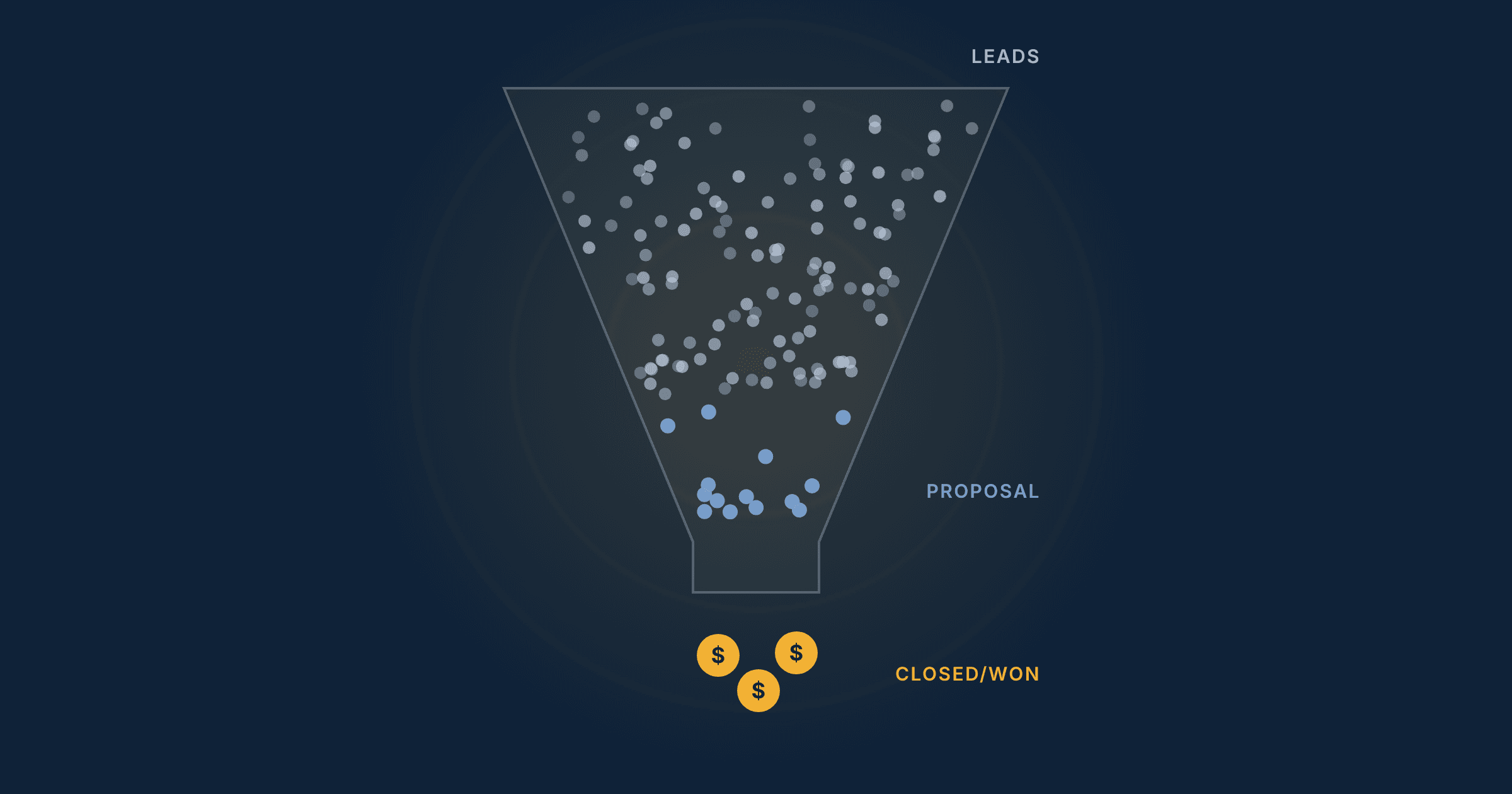
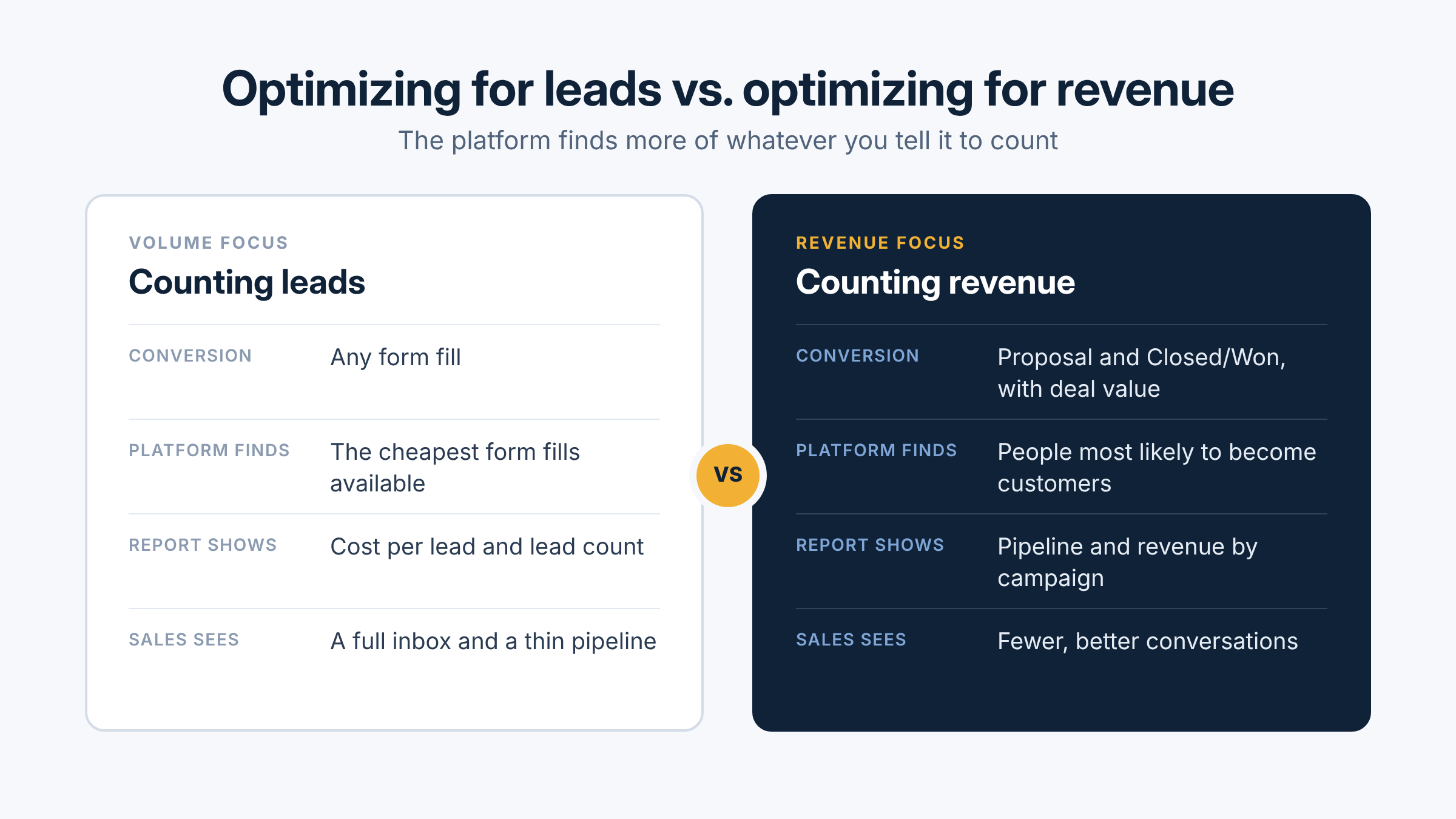
Ad platforms like Google Ads and Meta are very good at one thing: finding more of whatever you tell them to count. Tell them a form fill is a conversion, and they will find you form fills. Usually the cheapest ones available.
The platform can't tell the difference between a qualified buyer and a student downloading your guide for a class project. Both register as a conversion. So the algorithm learns to chase the easiest version of a lead, and your budget follows it.
A few signs this is happening in your account:
- Cost per lead keeps dropping, but close rates drop with it
- Sales spends more time disqualifying leads than working them
- The campaigns with the most leads are not the ones producing customers
- Nobody can say which channel drove last quarter's biggest deals
What measuring by revenue looks like
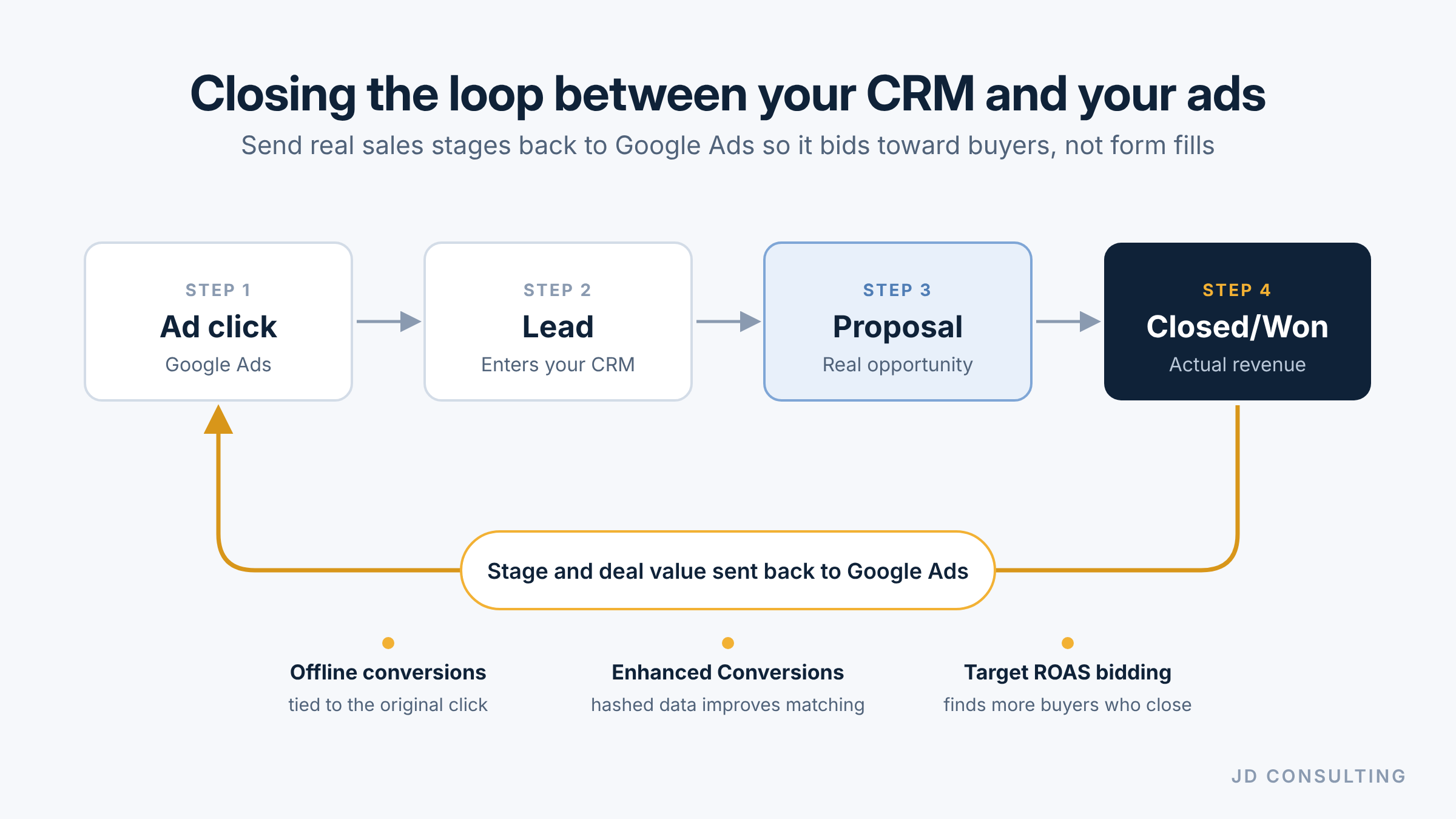
Measuring by revenue means connecting what happens in your CRM back to the marketing that started it. Instead of stopping at "a lead came in," you follow that lead through each stage of your sales process.
For most B2B companies, two CRM stages matter most:
- Proposal. A real opportunity with a real buyer on the other side. This is an early and reliable signal of lead quality.
- Closed/Won. Actual revenue, with an actual dollar amount attached.
When those stages flow back into your ad platforms and reports, the conversation changes. You stop asking how many leads you got and start asking which campaigns created pipeline and which ones created customers. That's a question your CFO cares about too.
How to make the shift
You don't need to rebuild your marketing from scratch. You need five pieces working together.
- Connect your CRM to your ad platforms. Whether you use HubSpot, Salesforce, or something else, the goal is the same. When a lead reaches Proposal or Closed/Won, that event is sent back to Google Ads as an offline conversion, tied to the click that started it.
- Turn on Enhanced Conversions. This sends hashed first party data, like email addresses, to Google so it can match conversions to ad clicks more accurately. It helps fill the gaps that cookie restrictions and privacy changes have created.
- Assign real values. A Closed/Won deal should carry its actual revenue. A Proposal can carry an estimated value based on your average deal size and close rate. Now the platform knows a $50,000 deal is worth more than a $5,000 one.
- Bid on value, not volume. With revenue data in place, you can move to a Target ROAS bidding strategy. Instead of hunting for the cheapest leads, the algorithm looks for the people most likely to become valuable customers.
- Build blended reporting. Bring CRM data and ad platform data into one view, so leadership sees spend, pipeline, and revenue side by side. This is where marketing and sales finally work from the same numbers. It's also much easier when your Google Ads naming conventions are clean and consistent.
One caveat: value-based bidding needs enough conversion data to learn from. If your sales cycle is long or deal volume is low, optimizing toward the Proposal stage first is often the practical starting point. You can layer in Closed/Won as the data builds.
Questions to ask your team or agency
If you're not sure where your marketing stands today, start with these:
- Can you show me revenue by campaign, not just leads?
- What happens to a lead after it enters our CRM, and does that data go back to the ad platforms?
- Are we bidding toward form fills or toward pipeline value?
- How long does it take for a closed deal to show up in our reports?
If the answers are vague, that's your starting point.
Connecting CRM data to paid media is the work I do every day, so budgets go toward revenue instead of volume. If you want a second set of eyes on how your marketing is measured, let's talk.
Frequently asked questions
What does it mean to measure marketing by revenue?
It means tracking which campaigns lead to real sales, not just form fills. You connect your CRM to your ad platforms and reports so every dollar of revenue can be traced back to the marketing that started it.
Why isn't lead volume a good measure of marketing success?
Lead volume counts every form fill the same way, whether it's a qualified buyer or someone who will never purchase. When ad platforms optimize for volume, they often find cheaper, lower quality leads, which can raise lead counts while revenue stays flat.
What is an offline conversion in Google Ads?
An offline conversion is a sale or sales stage that happens outside your website, like a signed proposal in your CRM. Sending it back to Google Ads shows the platform which clicks turned into real business.
What is Target ROAS bidding?
Target ROAS (return on ad spend) is a Google Ads bidding strategy that aims for a set amount of revenue for every dollar spent. It works best when the platform receives actual deal values from your CRM.
Do I need HubSpot or Salesforce to do this?
No. Most modern CRMs can pass data back to ad platforms, either natively or through an integration. HubSpot and Salesforce are common because their connections to Google Ads are well established.